Researchers say the most common cause of broken sleep after 50 isn’t insomnia.
A growing body of sleep-medicine research points away from the mind and toward an overlooked overnight signal — one that standard sleep aids don’t touch.

For decades, a man who woke repeatedly at night and told his doctor about it would likely leave with the word “insomnia” in his chart and advice about stress, screens, and caffeine. Sleep researchers now argue that for men over 50, that label is usually wrong — and the advice that follows from it is aimed at the wrong organ.
Insomnia, strictly defined, is a disorder of the brain’s sleep regulation: difficulty falling or staying asleep without an external cause. But when researchers actually instrument the nights of older men — sleep labs, voiding diaries, hormone panels — the wake-ups overwhelmingly trace to an external cause: the bladder’s overnight signaling.
When older men are asked what woke them, the most common answer isn’t worry. It’s the walk down the hall.
— from the sleep-maintenance literature

Two curves that cross in midlife
The research describes a collision of two age-related trends. The first is hormonal: production of the hormone that concentrates urine overnight declines with age, so the bladder fills faster at night. The second is architectural: deep slow-wave sleep — the stage that keeps routine body signals below the waking threshold — thins substantially after 50.
Each trend alone is manageable. Together, they produce the signature pattern: easy sleep onset, then reliable waking in the early hours. Researchers note the pattern is so consistent that many men can predict the time — the “3AM alarm” — because it tracks the body’s overnight fluid rhythm, not anxiety.
Why standard sleep aids miss
This reframing explains a widespread frustration: sedatives and melatonin often fail this group. Melatonin acts on the timing system that starts sleep and clears within hours. Sedatives raise the waking threshold bluntly, at the cost of sleep quality and morning alertness — while doing nothing about the signal itself.
The signal-first view suggests a different target: support normal bladder-muscle tone and moderate the nerve traffic between bladder and brain overnight, so routine filling stays below the waking threshold. This is the approach behind Nightlong’s NightTone Complex, formulated as a nightly 90-night protocol to match the timescale over which those tissue and signaling changes are observed to consolidate.

The practical conclusion from the research is simple, and for many men, liberating: broken sleep after 50 is usually not a disorder of the mind. It’s a solvable plumbing-and-signaling problem — and solving it at the source beats sedating the sleeper.
This article was fact-checked against peer-reviewed sleep-medicine and urology literature and reviewed for accuracy by Nightlong’s medical advisory board. Full reference list available on request at research@getnightlong.com.
From men on the protocol
Photos and words from verified buyers — individual experiences, not a promise of results.
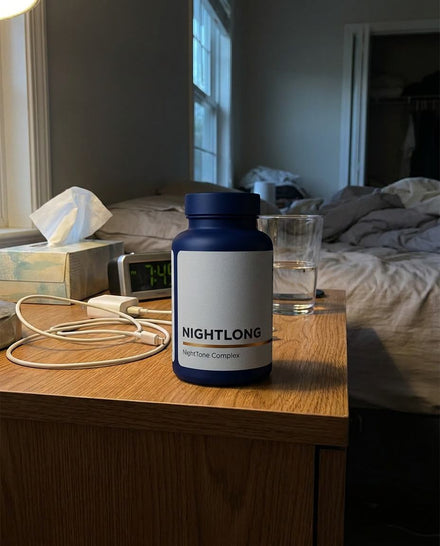
“It earned the nightstand spot.”

“Skeptical by nature. The guarantee got me to try it; I stayed.”

“I bought it for my husband. We both sleep better for it.”
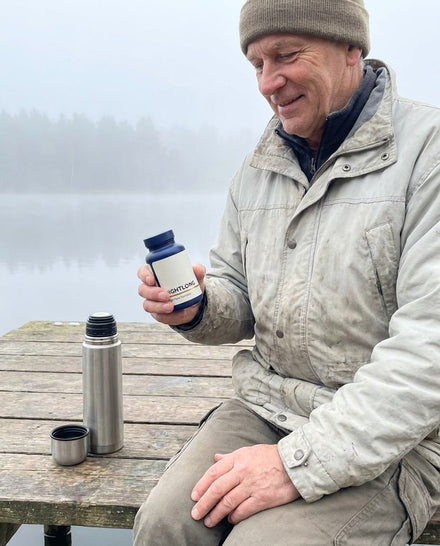
“5AM fishing feels different when you actually slept.”