Half of men over 50 share the same sleep interrupter — and it isn’t stress.
The most common reason men wake at night is also the least talked about. The numbers tell the story.

Ask a room of men over 50 how they slept and you’ll hear about stress, the news, the neighbor’s dog. What you’ll rarely hear — because nobody wants to say it — is the thing that actually woke most of them.
It gets more pronounced with each decade. Population studies put the figure near one in three at 40, one in two by the mid-fifties, and two in three past 70. Clinicians describe it as the most under-reported men’s health complaint on their intake forms: men mention the tiredness, not the trips.
Why it isn’t “just part of aging”
The mechanism is specific, which is good news — specific mechanisms can be addressed. With age, overnight urine production rises while bladder capacity and muscle tone decline. At the same time, sleep architecture thins: less deep sleep means a lower wake-up threshold. Two curves cross, and the result is the 3AM ritual.
Men treat the tiredness and ignore the trigger. It’s like mopping the floor every night instead of fixing the tap.
— Nightlong Journal, Health Desk

Because the cause is a signal loop — bladder to brain, overnight — the standard sleep toolkit misses it entirely. Melatonin, sleep trackers, and bedtime routines all aim at a different problem. That mismatch is why so many men conclude nothing works.

One number matters more than all of these: how many times you woke last night. If the answer is two or more, you’re not unlucky and you’re not just getting old. You’re one of the one-in-two — and it’s addressable.
This article was fact-checked against peer-reviewed sleep-medicine and urology literature and reviewed for accuracy by Nightlong’s medical advisory board. Full reference list available on request at research@getnightlong.com.
From men on the protocol
Photos and words from verified buyers — individual experiences, not a promise of results.
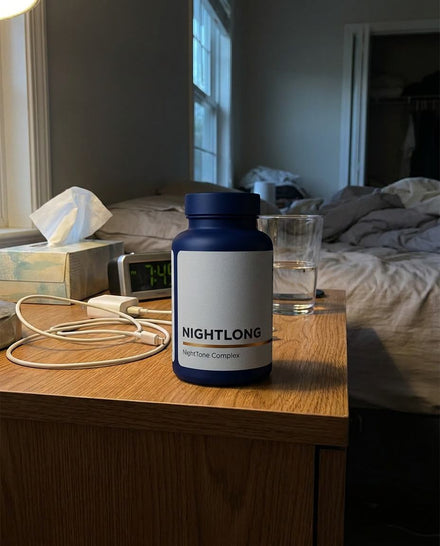
“It earned the nightstand spot.”
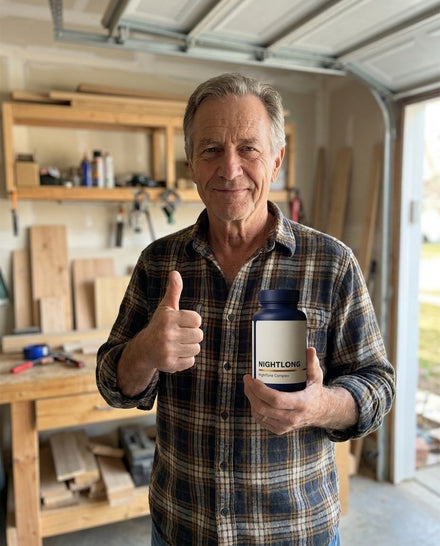
“Skeptical by nature. The guarantee got me to try it; I stayed.”
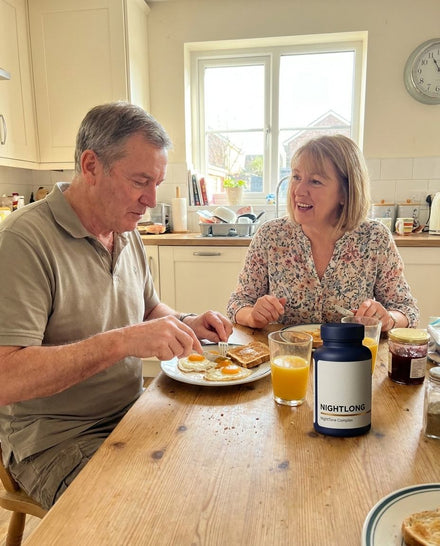
“I bought it for my husband. We both sleep better for it.”
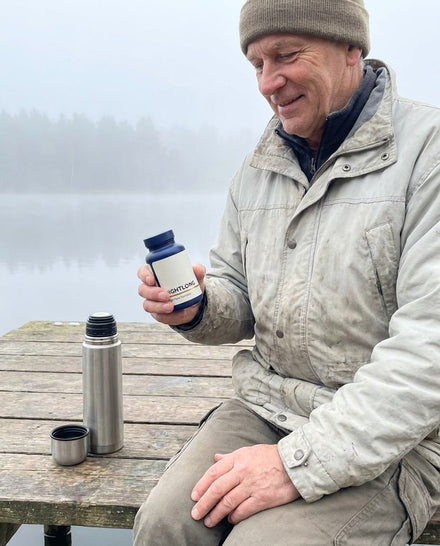
“5AM fishing feels different when you actually slept.”