The 3AM wake-up most sleep advice gets wrong.
Nearly all mainstream sleep advice targets falling asleep. But for men over 50, the defining complaint is different — and so is the fix.

Open any article about better sleep and you’ll find the same checklist: dim the lights, cool the room, ditch the screens, no caffeine after noon. It’s good advice — for a specific problem. That problem is sleep onset: the twenty minutes it takes to fall asleep.
But ask men over 50 what actually ruins their nights and you’ll hear a different story. They fall asleep fine. The night breaks apart later — a wake-up at 2 or 3AM, usually a trip to the bathroom, then thin, fragile sleep until the alarm. Sleep researchers call this sleep maintenance insomnia, and it responds to almost none of the standard advice.
Why the checklist fails at 3AM
The most common trigger for these wake-ups isn’t psychological at all. It’s a physical signal: the bladder reporting in. Two things change with age. First, the body’s overnight production of urine rises, because the hormone that normally suppresses it declines. Second, deep sleep gets shallower, which lowers the threshold for what wakes you.
A signal your brain ignored at 40 becomes an alarm clock at 55. The signal changed — and so did the sleeper.
— Nightlong Journal

Notice what’s missing from that mechanism: stress, screens, caffeine. That’s why cutting your afternoon coffee didn’t fix it. The checklist optimizes the start of your night. This is a problem at the middle of it.
What actually addresses it
Melatonin is the reflex answer, but melatonin is an onset tool — it helps you fall asleep, not stay asleep, and most of it has cleared your system by 3AM. Sedatives can hold you under, but they trade broken sleep for flattened sleep, plus next-day fog.
The more precise approach targets the signal loop itself: supporting normal bladder-muscle tone and calming the nerve traffic between bladder and brain overnight, so routine signals stay below the wake-up threshold. That’s the design brief behind Nightlong’s NightTone Complex — a nightly, non-sedative formula evaluated over a 90-night protocol, which is roughly how long the relevant tissue and signaling changes take to consolidate.

The takeaway isn’t that sleep hygiene is useless — keep the cool room. It’s that advice aimed at the start of the night can’t fix a problem that lives in the middle of it. If your night breaks at 3AM, treat the 3AM problem.
This article was fact-checked against peer-reviewed sleep-medicine and urology literature and reviewed for accuracy by Nightlong’s medical advisory board. Full reference list available on request at research@getnightlong.com.
From men on the protocol
Photos and words from verified buyers — individual experiences, not a promise of results.
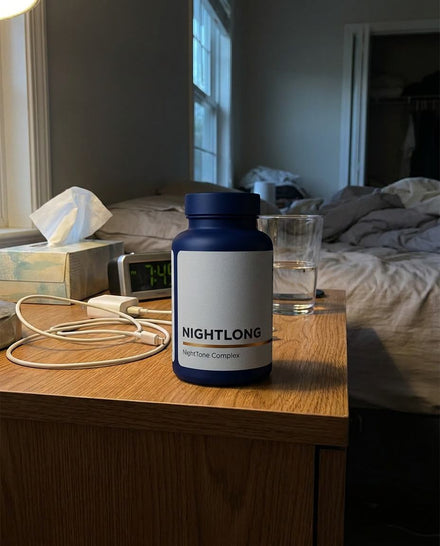
“It earned the nightstand spot.”
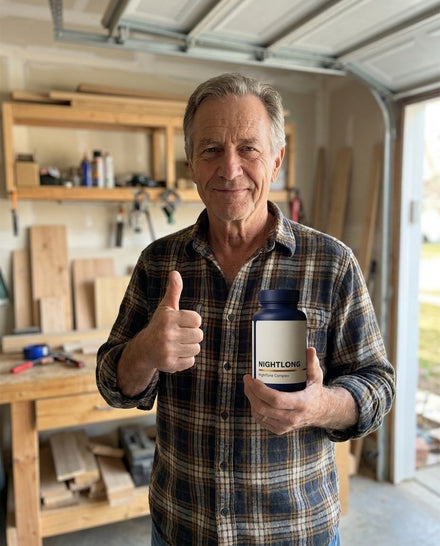
“Skeptical by nature. The guarantee got me to try it; I stayed.”

“I bought it for my husband. We both sleep better for it.”

“5AM fishing feels different when you actually slept.”