I spent $400 on sleep supplements before I found out why I kept waking at 3AM.
Melatonin, magnesium, tart cherry, weighted blankets. None of it worked — because none of it was aimed at the actual problem.
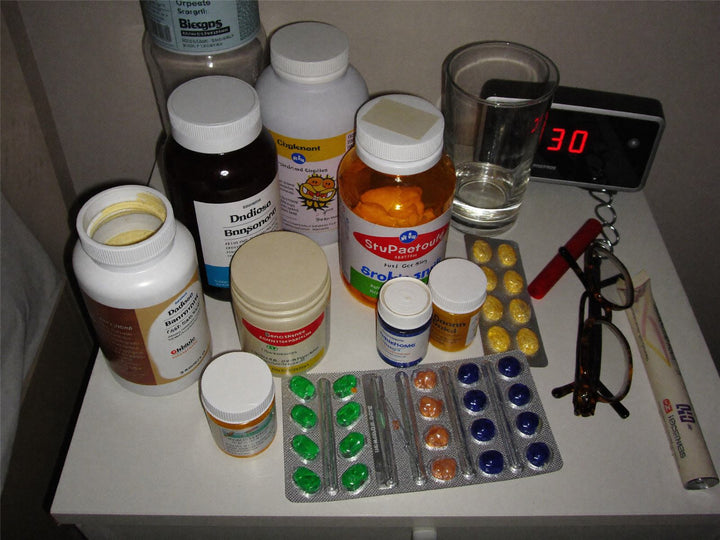
I want to be clear about something up front: I’m not a supplement person. I’m a retired electrician. I believe in things that either work or don’t. Which is why it embarrasses me a little to admit what’s in that photo above — about four hundred dollars’ worth of things that didn’t work.
My problem was never falling asleep. I’d be out by 10:30, easy. The problem was 3AM. Almost to the minute. I’d wake up, shuffle to the bathroom, and then lie there for an hour listening to the furnace. Then again around 4:30. For close to four years, I don’t think I strung together six unbroken hours more than a handful of times.
I was treating the wrong problem
Everything on that nightstand is designed to help you fall asleep. Melatonin tells your brain it’s nighttime. Magnesium relaxes you. The teas, the gummies, the sprays — all of it is aimed at the front end of the night. My front end was fine.
It was my doctor, of all people, who finally said the thing nobody had said. He asked me one question: “What wakes you up?” Not “how do you sleep” — what wakes you. And the honest answer was: my bladder. Every single time.
He said: “Tom, you don’t have a sleep problem. You have a signal problem. Fix the signal and the sleep fixes itself.”
— Tom, on the conversation that changed his nights
That’s the part most men my age never hear. After 50, the bladder muscle gets more irritable and the body produces more urine at night than it used to. Your sleep gets lighter with age at exactly the same time. So a signal your brain used to sleep through at 40 now snaps you wide awake at 58. It has nothing to do with stress, or screens, or coffee after lunch.
What I did differently
A buddy from my bowling league had been on something called Nightlong — a 90-night protocol built specifically around this nighttime-signal issue, not around sedation. One capsule with dinner. No grogginess, no weird dreams, no next-day fog. I was skeptical, but the 90-night guarantee made it a no-risk experiment, which is the only kind I run these days.
Week one: nothing, honestly. Week two: I noticed I was waking once instead of twice. Somewhere around week five, my wife pointed out that I hadn’t gotten up at all the night before. I hadn’t even registered it. By night 90 I was sleeping 10:30 to 5:45 most nights, straight through.


I threw out the nightstand pharmacy. Kept the reading glasses. If your nights look like mine did — asleep fine, then awake at 3 like clockwork — do yourself a favor and stop buying solutions to the wrong problem. It took me four years and four hundred dollars to figure that out. It doesn’t have to take you that long.
From men on the protocol
Photos and words from verified buyers — individual experiences, not a promise of results.
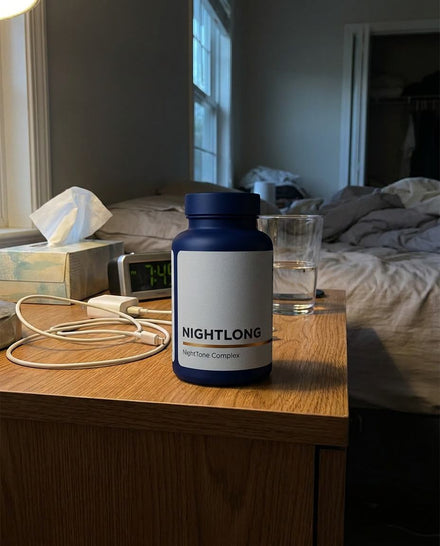
“It earned the nightstand spot.”
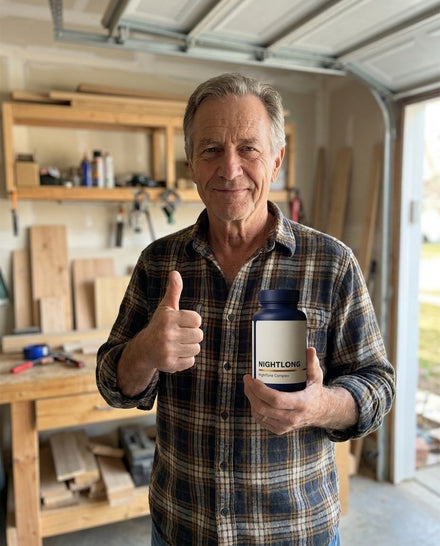
“Skeptical by nature. The guarantee got me to try it; I stayed.”
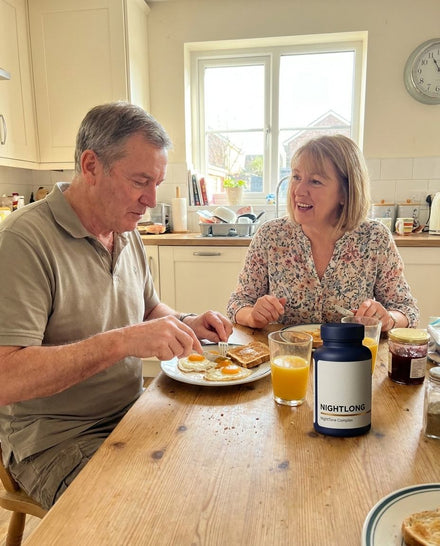
“I bought it for my husband. We both sleep better for it.”

“5AM fishing feels different when you actually slept.”